By Nathalia Romero, Copywriter and Real Estate Writer 11/26/2025
Visuals by Ignacio Velázquez, 2CRRE Executive Assistant
The current political and economic climate has created a clear pause in buyer momentum, slowing decision-making across multiple segments, especially for U.S. buyers who make up the majority of foreign demand in Costa Rica real estate . Particularly in the U.S. market, the continuous negative news cycle in the media amplifies uncertainty and caution, contributing to a significant shift in consumer psychology. An attitude of "wait and see" is replacing buyer urgency, with many potential buyers likely to hold off until interest rates decrease or the market definitively favors sellers.
Even with this hesitation, American investors continue to prioritize real estate over other asset classes. Recent fluctuations in U.S. housing data and a broader cooling trend have not changed the long-standing preference for property as a secure store of value. This pattern is consistent across demographics: from retirement-driven relocators to lifestyle-driven remote workers to high-net-worth buyers pursuing diversification.
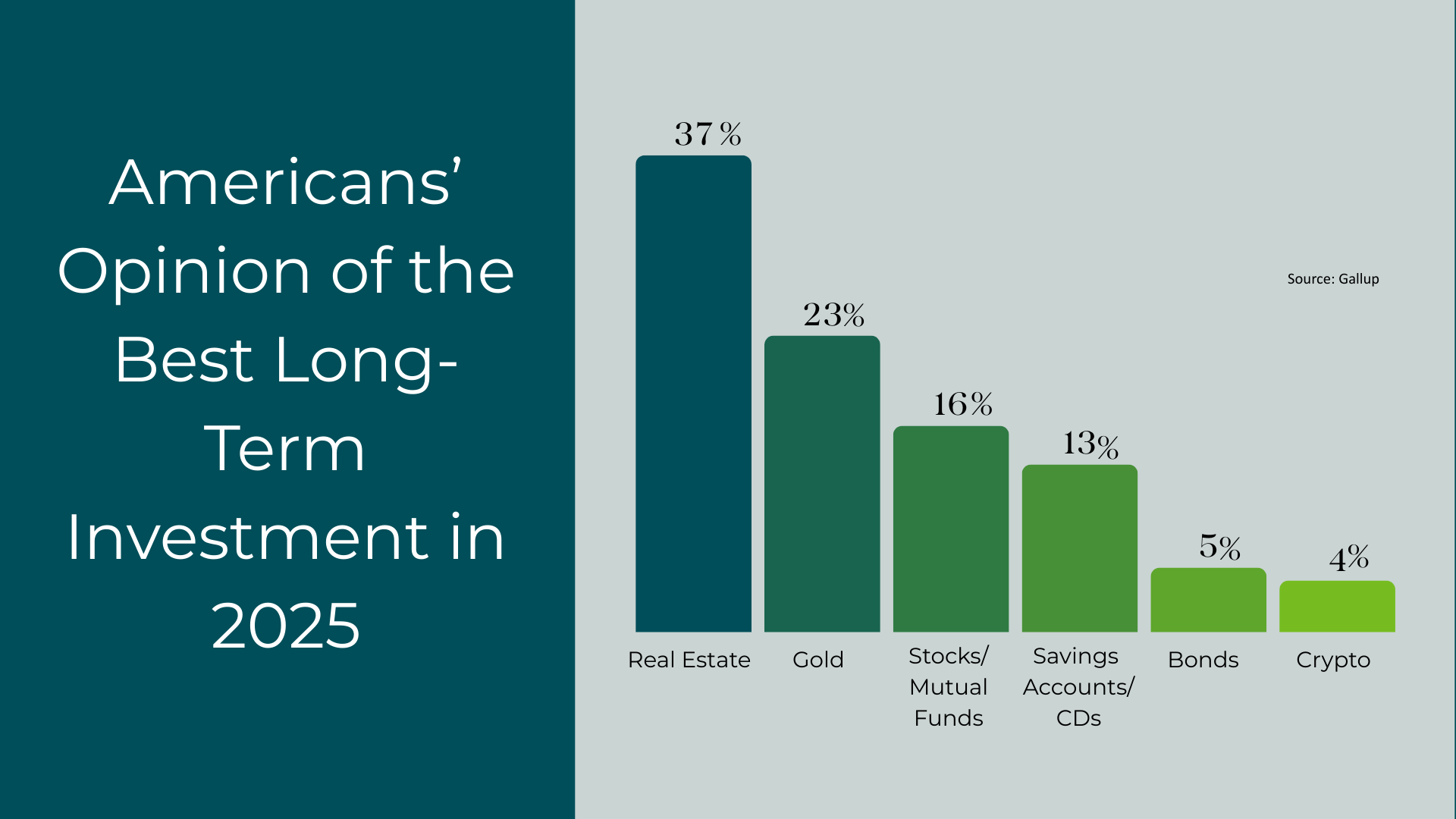
The consistent, strong interest underscores a deep-seated confidence in Costa Rican property ownership as a robust strategy for both preserving and growing wealth. This perception often drives the interest, viewing real estate as a tangible asset that offers greater stability than markets with higher volatility. Consequently, even amid softer market conditions, American investors continue to favor residential, commercial, or land purchases as their preferred long-term investment vehicle.
2025 Market Behavior
The Costa Rican real estate market has went through a clear recalibration since 2023. Marked by the start of a more stable and structured market cycle and a departure from the post-pandemic of previous years. That earlier phase was defined by fast-rising demand, rapid price increases, and limited inventory driven mainly by international buyers looking for lifestyle and investment opportunities in coastal areas.
In the beginning of 2025, activity slowed compared to prior years. This slowdown reflected a necessary adjustment. Prices leveled off, inventory increased, and the market corrected the accelerated conditions seen during the boom period. Buyer behavior also shifted toward more deliberate, long-term decision-making.
This adjustment phase likely represents the peak of the slowdown before the market begins its next period of growth. With pricing stabilizing, inventory normalizing, and demand evolving, the market is positioned for a more sustainable upward cycle moving forward.
- High-end demand stayed resilient: focusing now on relocation and Plan B strategies
- Rental markets tightened significantly.
- Buyers favored walkable coastal towns, gated communities, and lifestyle-driven master-planned projects.
- Smart investors shifted from “buy anything ocean-view” to buying strategically, focusing on accessibility, infrastructure, and exit strategy.
The current market presents a unique and timely opportunity, particularly for long-term vision investors. Following a period of growth, the market is currently stabilizing, creating an advantageous entry point. With favorable pricing now, 2026 is shaping up to be the exact moment many have awaited, ushering in a clear buyers' market.
The average sales price stabilized after volatility:
- 2023: ~$850K
- 2024: ~$660K
- 2025: ~$690K (+4.4%)
Costa Rica’s Opportunity: Global Migration
The dynamics of Costa Rica's real estate market are unique, characterized by notable stability and specific appreciation cycles. This distinct profile is drawing substantial international interest, with projections indicating a net influx of over 350 High-Net-Worth Individuals (HNWIs) to Costa Rica in 2026. This expected migration is anticipated to generate approximately $2.8 billion in transferred investable assets.
According to statistics, the number of US residents moving overseas increased by 102% in the first quarter of 2025 compared to the previous quarter. Costa Rica is becoming more popular as a destination for alternative lifestyles due to this "Plan B" mentality.
Henley & Partners reports a 660% spike in residency applications year-over-year. This exponential surge has positioned Costa Rica among the top four global residency programs favored by Americans, reflecting a major shift in global migration patterns.
Beyond its celebrated natural beauty, the nation’s increasing appeal stems from an exceptional quality of life, a stable political environment, and attractive, clear-cut residency pathways that offer an alternative for those looking to secure a second home or embrace a new life abroad.
Buyer Behavior Shifts
2025 showed a clear behavioral shift in the real estate market, moving away from the speculative frenzy that characterized the preceding years. Buyers and investors, influenced by a period of higher interest rates and a general slowdown in global economic growth, adopted a more cautious and deliberate approach.
1. Evidence-Based Decision Making
Buyers demanded comps, rental performance data, CAP rate scenarios & neighborhood projections.
2. Long-Term Rentals Became a Priority
Driven by remote workers, long-stay tourism & family relocations.
3. Turnkey Became King
Time-to-market mattered more than renovation potential.
Average Listing Price per Sq.M ($)
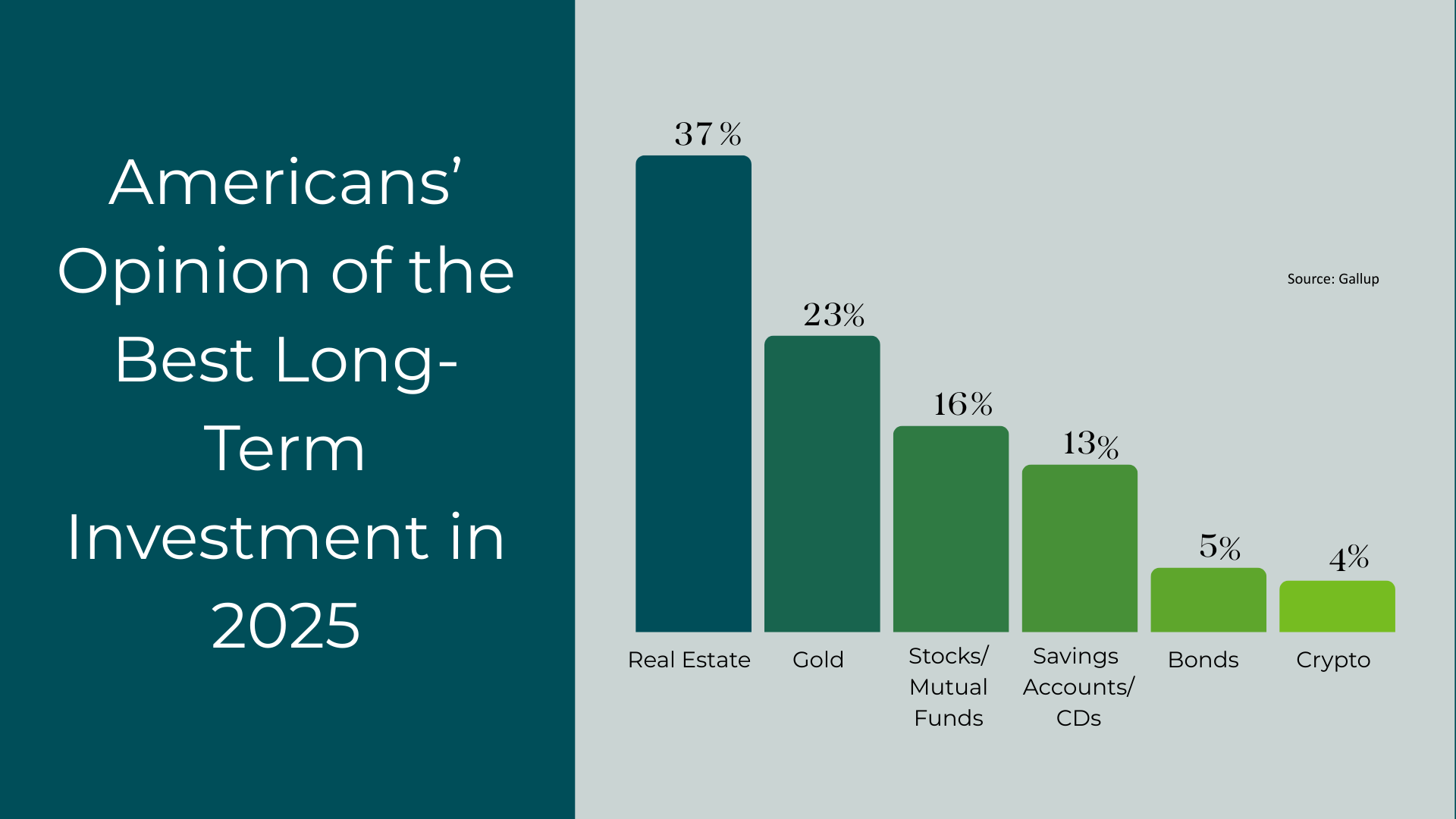
The Average Listing Price per Square Meter in Costa Rica from September 2024 to September 2025 shows a sharply tiered market, with prime coastal hubs and gated luxury communities continuing to command premium values. Destinations like Hacienda Pinilla, Santa Teresa, Tamarindo, and Papagayo lead the country in high-value pricing, while emerging zones such as Uvita, Ojochal, and metropolitan areas like Escazú, Santa Ana, and Curridabat remain more accessible entry points for buyers and investors.
Average Listing Price per Sq.M ($)
Higher Price per Square Meter in Costa Rica in 2025.
- Hacienda Pinilla: $4,321
- Santa Teresa: $4,251
- Dominical: $3,522
- Tamarindo: $3,332
- Uvita: $3,001
Active Listings’ Average Price ($)
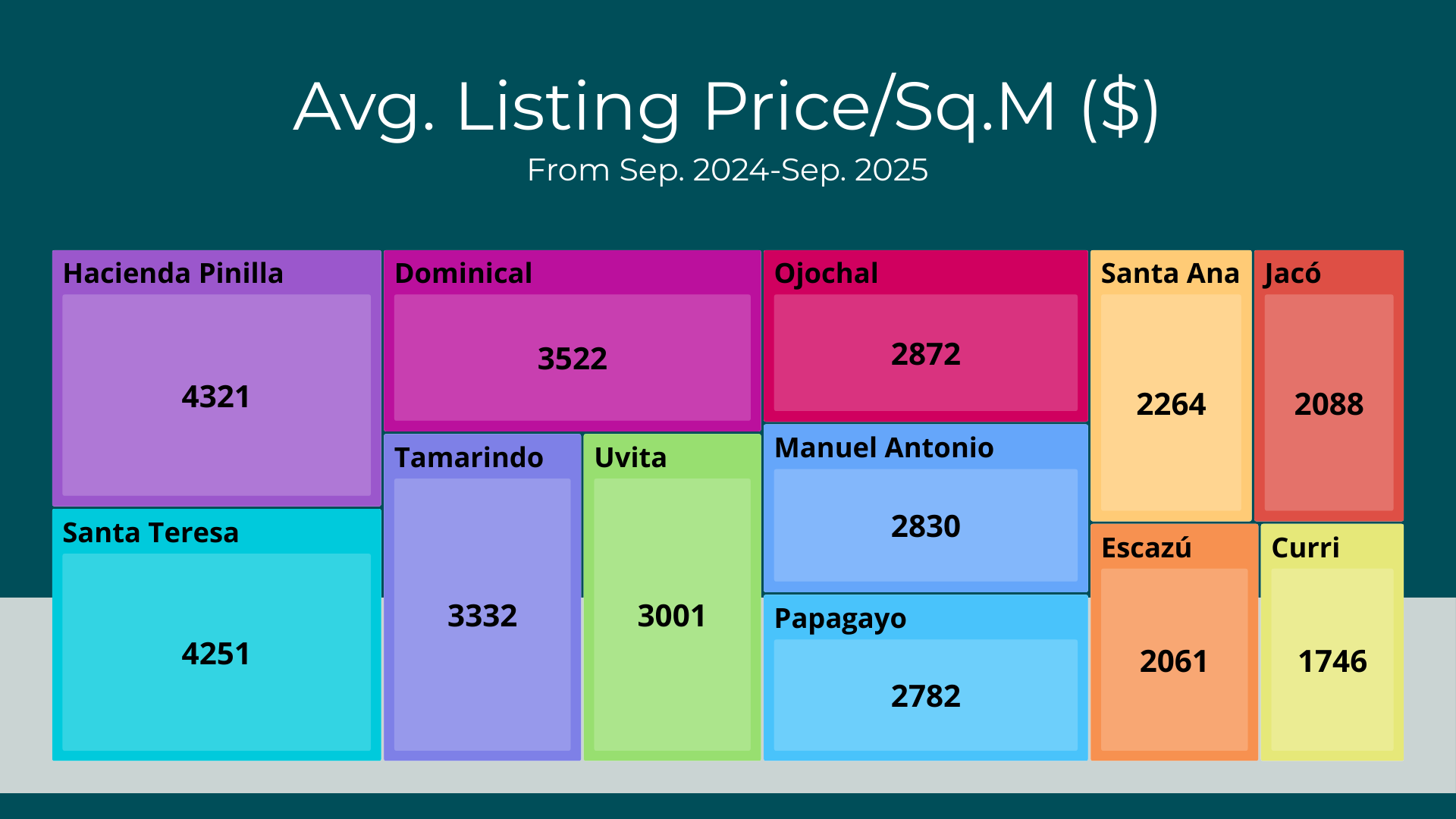
The real estate market has settled into a significantly more sustainable and robust pace after navigating a recent period marked by volatility and swift changes. This stabilization suggests a crucial shift from the unpredictable highs and lows seen previously, which were often fueled by external economic pressures, pandemic-related demand surges, and fluctuating interest rates. Following that phase of turbulence, the market has recalibrated, establishing more predictable patterns of growth and activity.
Active Listings’ Average Price ($M)
- Hacienda Pinilla: $2.10M (+14.2%)
- Santa Teresa: $1.67M (+12.7%)
- Papagayo: $1.15M (+9.9%)
- Manuel Antonio: $1.10M (+10.8%)
- Tamarindo: $1.11M (+1.1%)
Urban markets:
- Escazú: $1.04M (-4.2%)
- Curridabat: $715K (-6.5%)
- Santa Ana in San Jose: $1.62M (+9.9%)
This reflects more supply in vertical urban markets and high scarcity in coastal communities.
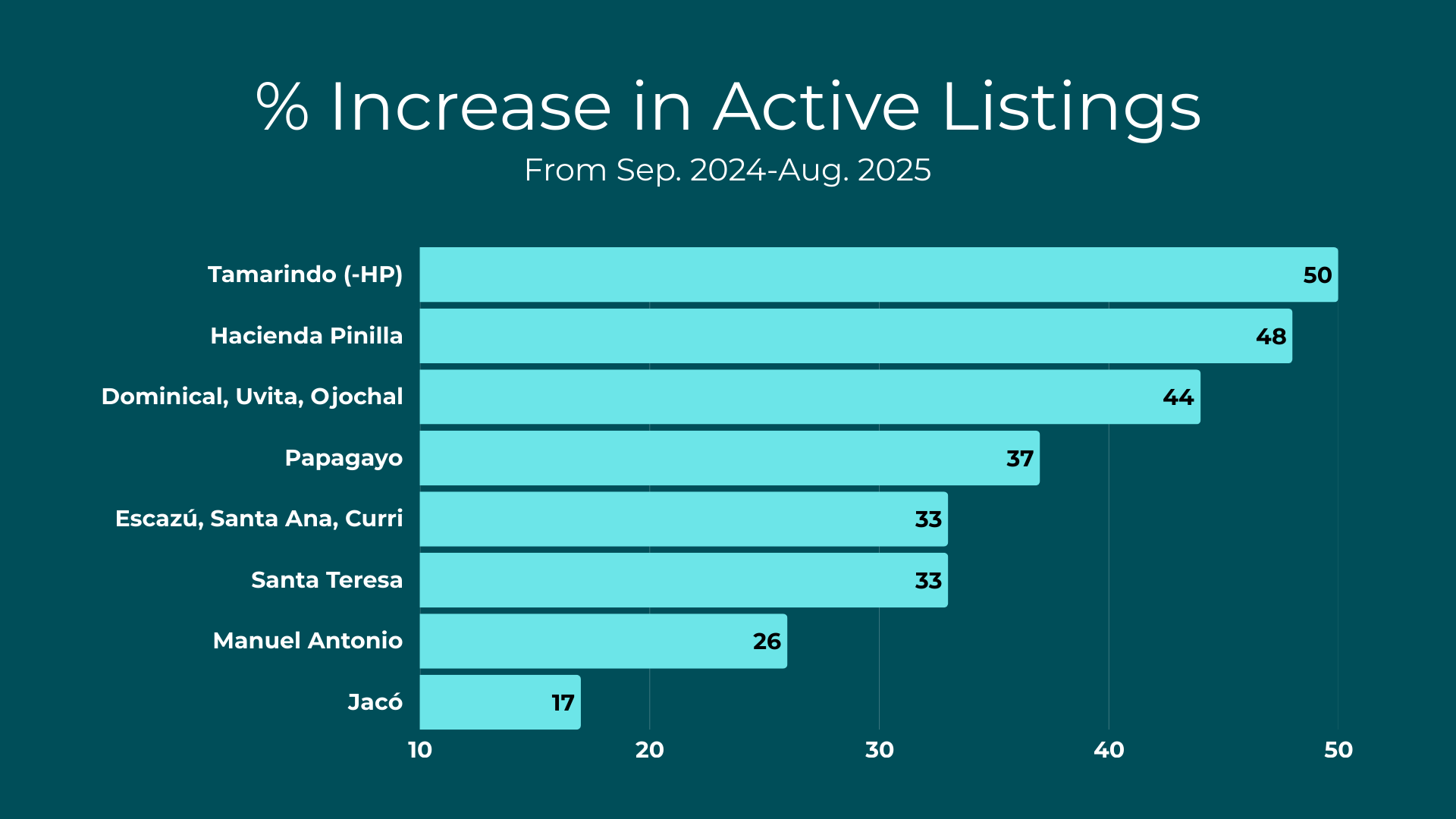
Increase in Active Listings
Understanding the percentage increase in active listings is essential for any buyer trying to read the real temperature of their target market. A surge in inventory, like Tamarindo’s 50% increase or Hacienda Pinilla’s 48% rise, signals more options and stronger negotiation leverage. Meanwhile, markets with modest growth, such as Manuel Antonio with 26% or Jacó with 17% show tighter supply and higher urgency for buyers. These metrics reveal how fast inventory is shifting, how aggressively sellers are pricing, and where the balance of power sits in each micro-market.
Active Listings
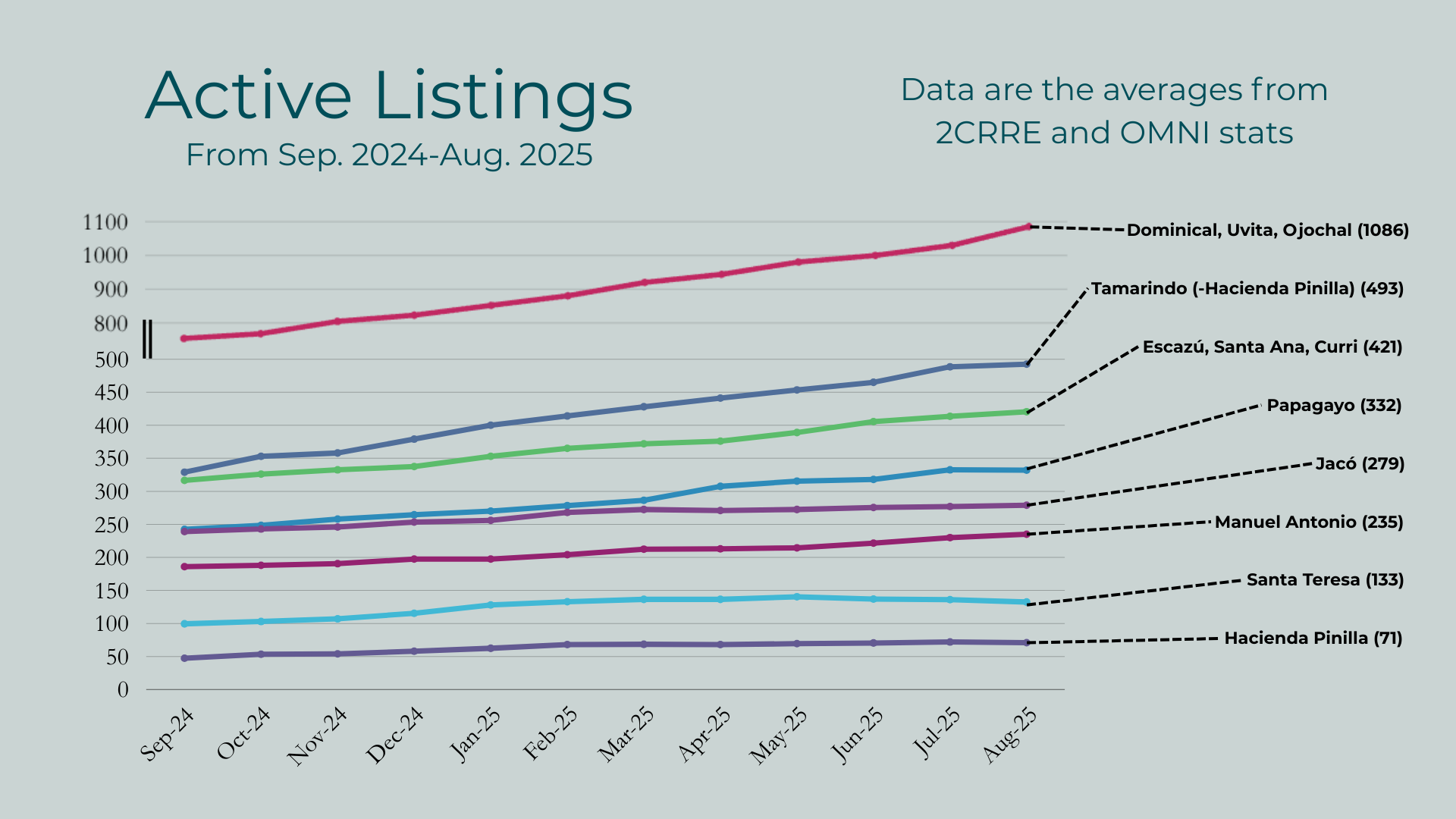
The active-listings landscape from September 2024 to August 2025 shows inventory expanding across almost all regions. An increase in market listings leads to more opportunities for buyers and greater price stabilization, resulting in a buyer's market with less competition and better price points for homes for sale in costa rica .
- Dominical–Uvita–Ojochal: 1,086 listings
- Tamarindo (-HP): 493 listings
- Escazú–Santa Ana–Curridabat: 421 listings
- Papagayo: 332 listings
- Jacó: 279 listings
- Manuel Antonio: 235 listings
- Santa Teresa: 133 listings
- Hacienda Pinilla: 71 listings
Despite growth, the most desirable lifestyle markets remain supply-constrained.
Think Long Term
End-user investment cycles typically span 10 to 20 years, making it important to note that current prices are not indicative of where they will be five years from now.
Scott Cutter, CEO & Main Broker of 2CRRE:
“Considering the outlook for Costa Rica over the next 15 years, competitive and comprehensive financing options could be a game-changing factor that significantly impacts future economic cycles. The question is: Are you ready to hop on this opportunity?”
You Win When You Buy
2026 Looks Like the Perfect Time to Invest in Costa Rica Real Estate
Together, these indicators reveal a maturing, segmented, data-driven Costa Rica real estate market. Demand is concentrating in the markets with the strongest fundamentals. Buyers who understand inventory cycles, price behavior, and micro-market dynamics will win. Costa Rica is no longer emerging; it is a competitive environment where informed strategy beats hesitation.
“In Real Estate, you win when you buy, not when you sell.”
The real estate market has recently undergone consistent adjustments, characterized by several main shifts. A notable increase in available inventory, coupled with numerous price reductions across various sectors, has directly contributed to a significant increase in the average time on the market for properties. This deceleration in sales velocity reflects the current market dynamics.
Historically, a year exhibiting such pronounced and sustained downward trends, expanded inventory, and price softening is often followed by an anticipated upward shift in 2026 in the market curve. This expected change suggests that the market may be nearing a point of stabilization, or potentially an inflection point, from which a period of increased activity or price recovery could emerge in the near future. These market cycles are a standard feature of the real estate landscape, and current indicators suggest the market is poised for its next phase.
The market has recently experienced a significant surge in demand and a corresponding increase in transaction volume. This heightened activity is directly attributable to a downward shift in property valuations, leading to lower and more competitive pricing across the board.
The emergence of these more attractive price points has successfully stimulated buyer interest, drawing in both new entrants and previously hesitant investors who are capitalizing on the favorable conditions to secure assets. This trend suggests a responsive market dynamic where accessible pricing serves as a primary catalyst for elevated sales performance and overall market liquidity.
By entering the market in 2026, buyers are strategically positioned to capitalize on the recovery phase, allowing them to purchase properties at the most advantageous prices immediately following the market trough.
This window of opportunity offers buyers a unique chance for great pricing, to secure better square footage, amenities, or locations than during peak years. Aligning a purchase timeline with 2026 maximizes purchasing power at the market cycle's optimal moment, establishing a strong foundation for future equity growth as the market recovers.